
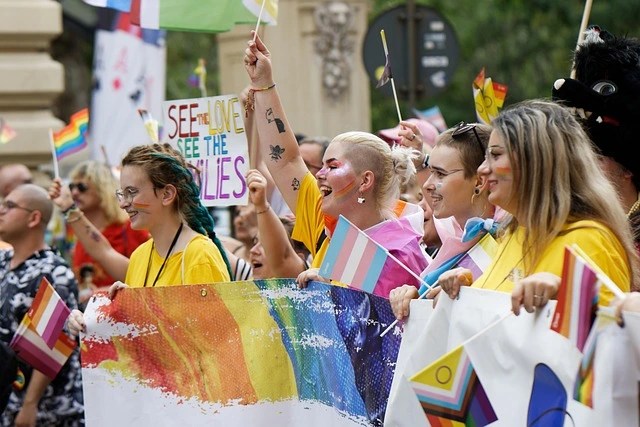
June brings Pride Month again, and with it the familiar mix of celebration and complexity that many of my LGBTQIA+ clients know well. While social media fills with rainbow everything and brands dust off their Pride marketing, the lived reality for many queer people remains more nuanced.
If you’re reading this, you might be wondering what Pride actually means – whether you’re still figuring out your own identity, dealing with unsupportive family, trying to get through another day feeling like yourself in a world that doesn’t always make space for that, or you’re someone supporting a loved one through these experiences.
The Gap Between Progress and Reality
Yes, some things have improved. Same-sex marriage is legal, workplace protections exist on paper, and representation in media has increased. But progress isn’t linear, and recent developments like the UK Supreme Court’s April 2025 ruling that defines “woman” as referring only to biological sex serve as stark reminders of how quickly legal protections can shift.
This ruling is expected to impact accommodations for trans women in bathrooms, hospital wards, sports clubs and more. But beyond the practical implications, there’s the psychological impact on both trans people and cisgender women who now face increased scrutiny about their “biological credentials” in spaces that should feel safe.
I see the effects of this uncertainty in my counselling practice regularly. The external world might seem more accepting in some ways, but internal struggles with identity, family relationships, and self-acceptance don’t magically resolve because it’s Pride Month – and they certainly don’t get easier when legal definitions of your identity are being contested in court.
The Mental Health Reality
Let’s be honest about what I actually see in my practice. People exhausted from code-switching between different versions of themselves depending on who they’re with. Adults still dealing with the emotional fallout from families who “love them but don’t understand.” The particular loneliness of feeling like you don’t quite fit anywhere, even within LGBTQIA+ spaces.
There’s the scenario of someone who came out at work and now wonders if every negative interaction is about their sexuality. Or the teenager whose parents say they’re supportive but keep asking when this “phase” will end. The partner of someone who’s transitioning, trying to navigate their own feelings while being supportive.
These aren’t issues that get solved by attending a Pride parade, though community connection certainly helps some people. They’re complex psychological challenges that often require time, space, and professional support to work through.
What Actually Helps
Therapy isn’t about becoming more Pride-worthy or learning to love yourself in time for rainbow season. It’s about having somewhere to untangle the mess of growing up different in a world that often expects conformity.
Sometimes that looks like grieving the family acceptance you wanted but didn’t get. Sometimes it’s learning to trust your own instincts about who’s safe to be yourself around. Often it involves unpicking years of internalized messages about what’s “normal” or acceptable.
The work is slower and messier than the Pride Month messaging suggests, but it’s also more real. It’s about figuring out how to live as yourself not just during Pride Month, but in January when no one’s talking about LGBTQIA+ issues and you still have to get up and face the world.
Beyond the Month
Pride Month will end, the flags will come down, and most people will move on to the next thing. But if you’re LGBTQIA+, you’ll still be navigating the same challenges in July.
If you’re struggling with any of this stuff – whether you’re LGBTQIA+ dealing with identity, family dynamics, or workplace stress, or you’re a family member, friend, or partner trying to understand and support someone you care about – you don’t have to figure it out alone.
I work in person and online with people across the spectrum of gender and sexuality, and I get that finding a therapist who actually understands these issues (rather than just saying they’re “LGBTQIA+ friendly”) matters. If you think counselling might help, you can contact me on 07568 350 457, email me on psi.counselling@gmail.com or use the site contact form.
And if you’re in crisis, support is available year-round, not just during Pride Month. Samaritans are available 24/7 on 116 123, and the LGBT Foundation offers specific support on 0345 3 30 30 30.

 Pensive Counselling: Essex Therapy